Key takeaways
- Water pressure causes most wall failures, so drainage comes first.
- A compacted base and setback keep the wall stable.
- Taller walls need reinforcement and sometimes engineering.
- Block, natural stone and boulders each suit different sites.
How a wall works
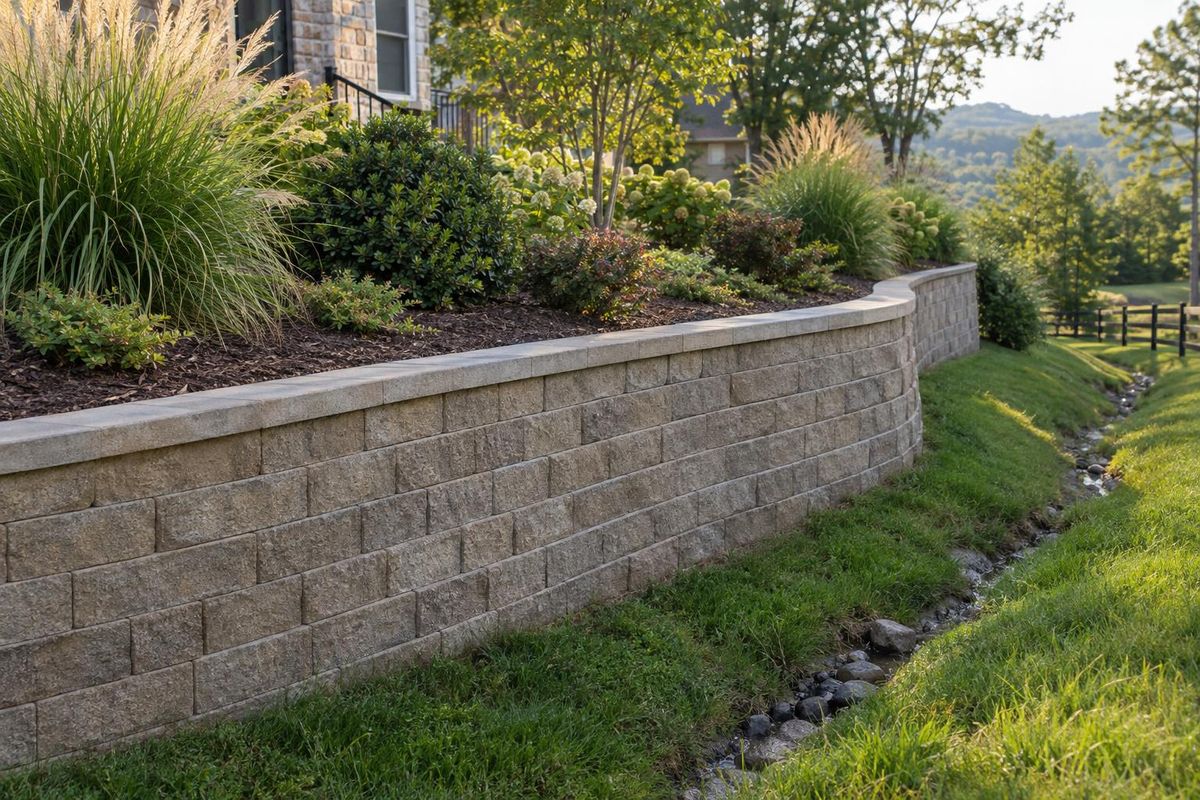
A retaining wall holds soil against gravity, and wet soil is much heavier than dry. Walls lean back into the slope, which is called setback or batter, and they sit on a compacted base. Behind the wall, gravel and a drain pipe let water out so it does not build pressure.
Most walls that fail did not have drainage.
Block, stone and boulders
Segmental block interlocks, is uniform and comes in many colors. Natural stone is stacked by hand and looks organic. Boulders are placed with equipment and suit big slopes and rural settings.
Height, space, access and look decide which is right for your site.
Taller walls and reinforcement
Walls over a few feet usually need geogrid, which is a mesh laid between courses and extending back into the soil. Walls near buildings, driveways or slopes above them may need engineering. Local codes can require permits at certain heights.
Ask who designs a tall wall and what the plan includes.
Where to learn more
Manufacturers and trade groups publish design and installation manuals. Brand names and organizations belong to their owners, and we are not affiliated with them.
Official sites to explore
Brand names and logos belong to their owners. These links open the official websites in a new tab, and we are not affiliated with them.
Quick answers
How tall can a wall be without engineering?
Short walls are common without it. Taller walls and walls with loads above them need more. Local rules vary.
Do I need drainage behind the wall?
Yes, always.
How long should a wall last?
A well-built wall lasts a long time. Poor drainage is the main threat.