Key takeaways
- Thickness decides how a stone can be set.
- Dry-laid stone is flexible, mortared stone is rigid.
- Color and texture vary by quarry and by piece.
- Some stones need sealing, and some do not.
Types of stone
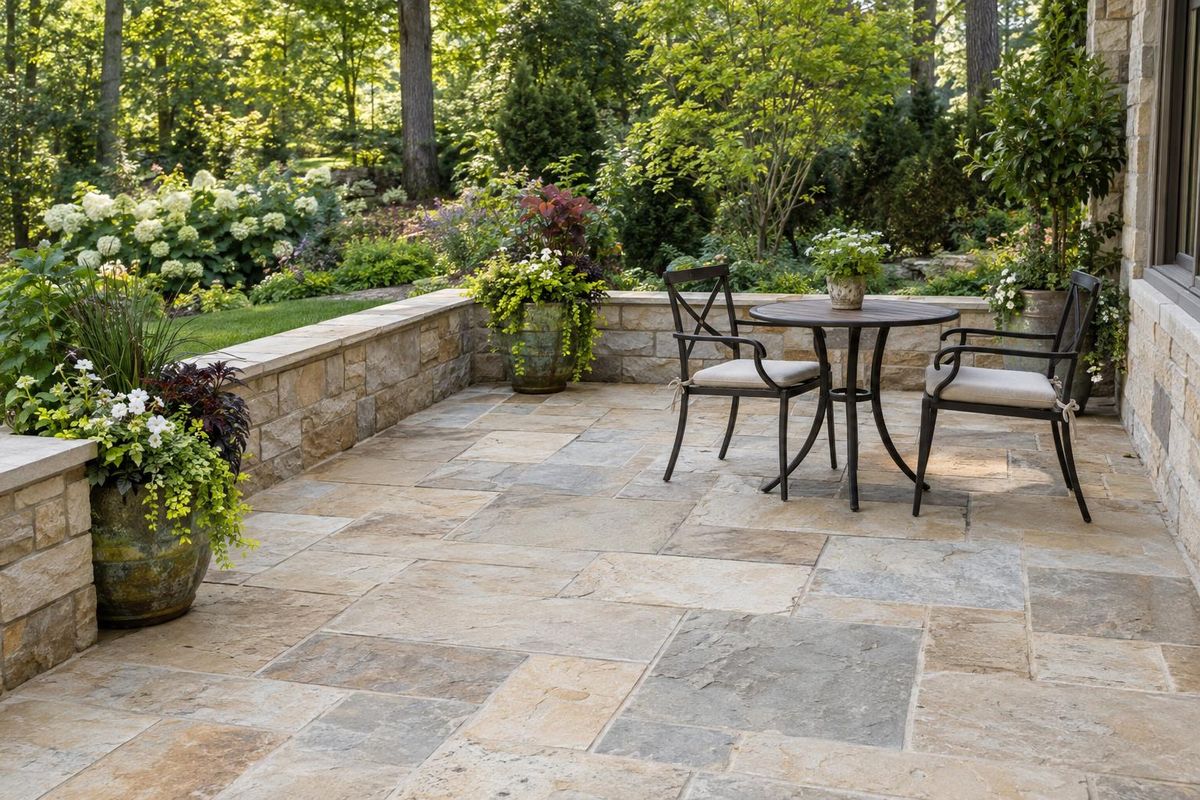
Flagstone is a flat sandstone, limestone or bluestone. Limestone is often buff or gray and common in Tennessee. Bluestone is a dense blue-gray stone. Fieldstone is gathered rounded stone, often used for walls.
Each has a different feel, color range and way of weathering.
Thickness and setting
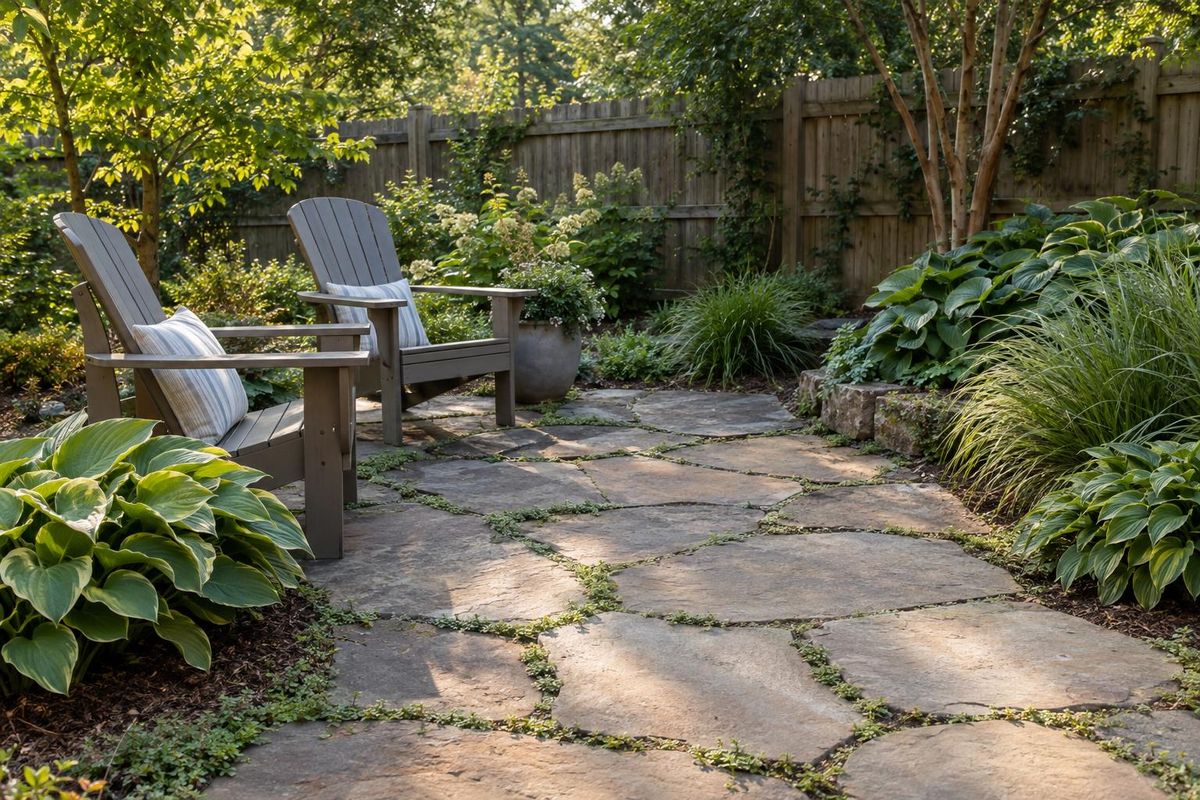
Thicker stone can be set on a compacted stone base with sand or gravel joints. Thin stone usually needs a concrete slab beneath and mortar. The setting method affects comfort, strength and how repairs are done.
A good installer sorts stone so thicknesses and colors are balanced across the patio.
Care and sealing
Natural stone ages beautifully and develops a patina. Some stones are porous and can stain, so sealer may help. Moss and algae can grow in shade, so cleaning now and then keeps the surface safe.
Avoid harsh acids on limestone, which can etch.
Where to learn more
The institute below publishes information about natural stone. Brand names and organizations belong to their owners, and we are not affiliated with them.
Official sites to explore
Brand names and logos belong to their owners. These links open the official websites in a new tab, and we are not affiliated with them.
Quick answers
Is natural stone slippery?
Textured stone has good traction. Polished stone can be slippery when wet.
How do I clean natural stone?
Gentle washing with a mild cleaner and a soft brush is usually enough.
Can I mix stone types?
Yes, with care. Borders and insets in a second stone can look great.