
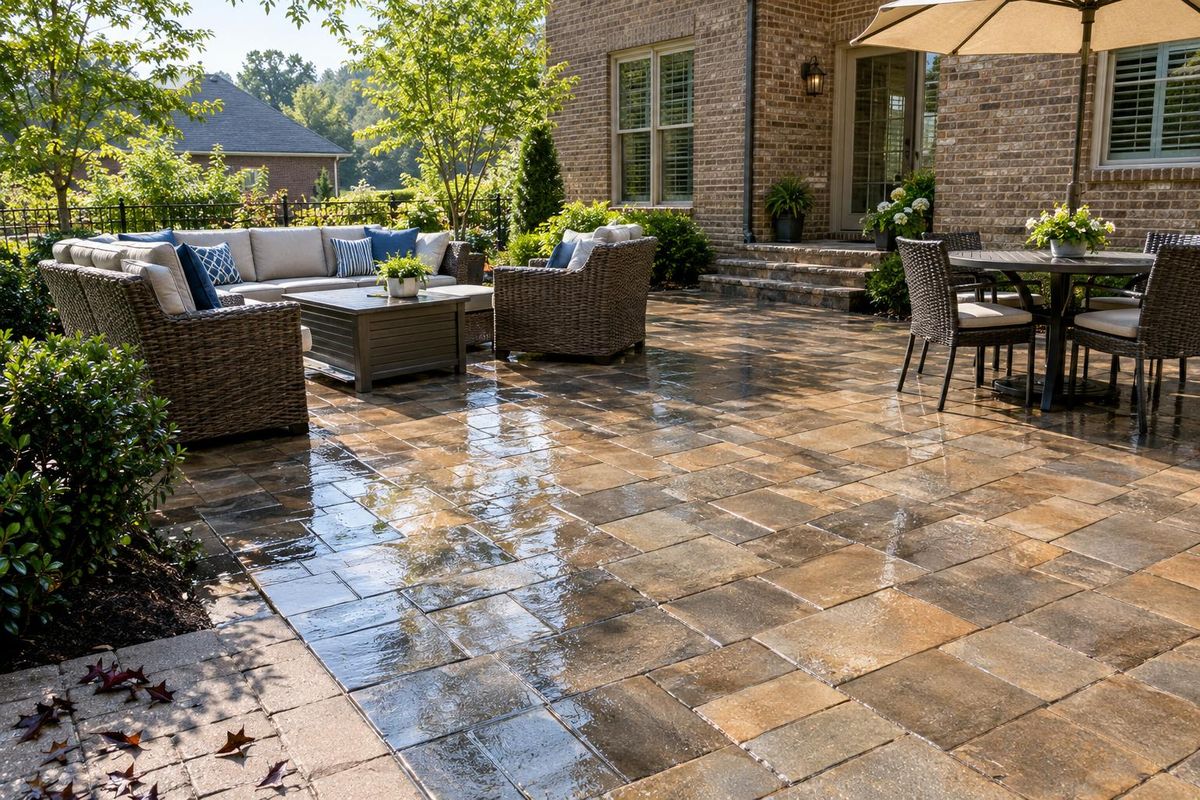
Key takeaways
- Regular sweeping and rinsing prevent most buildup.
- Joint sand needs topping up now and then.
- Sealing protects color and stabilizes joints.
- Check walls and drains after big storms.
Routine cleaning
Sweep leaves and debris, and rinse the surface with a hose. Wash with mild soap and a soft brush for dirt and algae. Avoid harsh chemicals and high pressure that can strip joint sand or dull the surface.
Move furniture now and then so spots do not form.
Joint sand and weeds
Over time joint sand washes out. Topping it up with polymeric sand locks pavers and blocks weeds and ants. Pull weeds early, before roots grow deep.
Check the edges where pavers meet the lawn.
Sealing
Sealer protects against stains and fading and stabilizes the joint sand. Reseal every few years, depending on traffic and weather. Clean the surface first and choose a product made for the material.
Test in a small area to confirm the look.
Seasonal checks
After winter, look for heaved pavers and washed-out joints. After heavy storms, check that drains are clear and walls are not bulging. Small fixes early prevent large repairs later.
The makers below publish care guides. Brand names belong to their owners, and we are not affiliated with them.
Official sites to explore
Brand names and logos belong to their owners. These links open the official websites in a new tab, and we are not affiliated with them.
Quick answers
How often should I seal pavers?
Every few years is common. It depends on traffic, shade and the product.
Can I pressure wash pavers?
Yes, carefully, with the right pressure and nozzle. Too much pressure removes joint sand.
How do I stop weeds?
Keep joints full of polymeric sand and sweep leaves away.