Key takeaways
- Most hardscape problems start with water.
- Slope surfaces away from the house, at least a small amount in every direction.
- Channel drains catch surface water, French drains collect soil water.
- Downspouts need to discharge well away from the foundation.
Where water goes
Water follows slope. It collects at low spots, runs along walls and pools beside foundations. During a storm, walk the yard and watch where it travels. That map shows where drains, swales or regrading are needed.
Clay soils drain slowly, so runoff is greater than on sandy soils.
Slope and surface drains
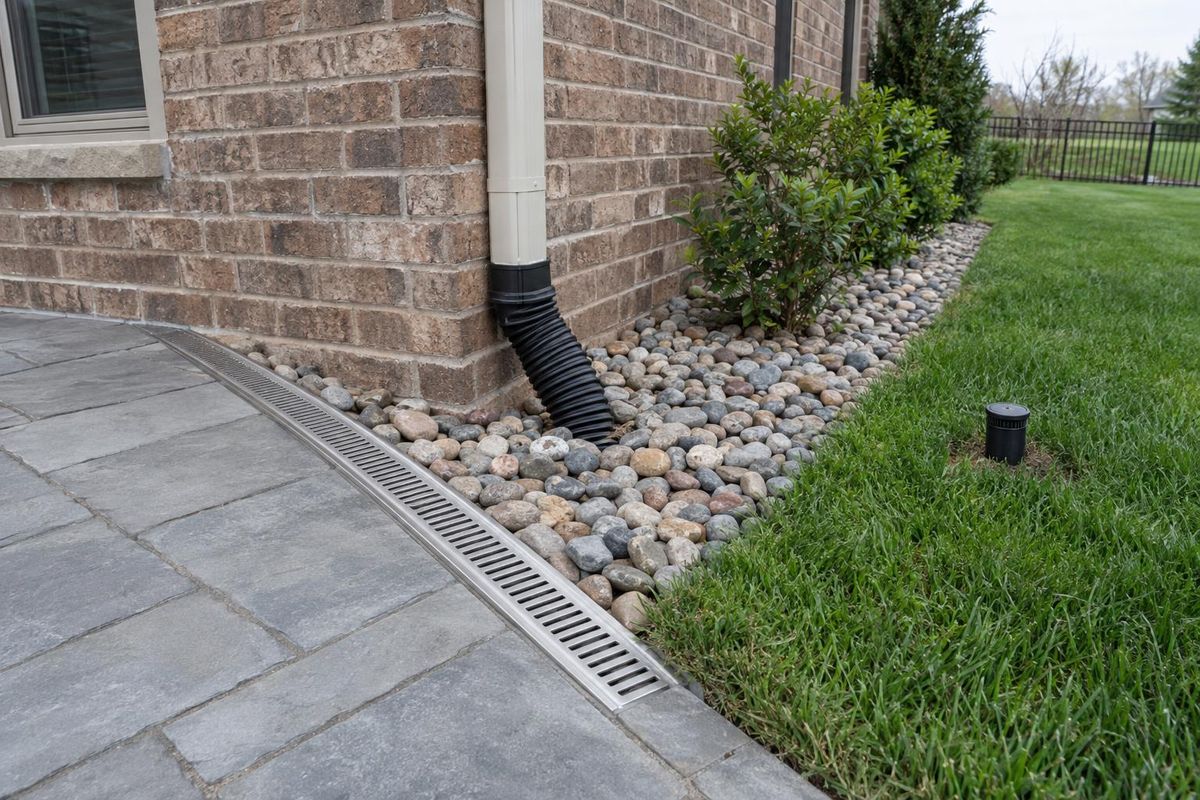
Patios and driveways should slope gently away from the house. Where surface water cannot run off, channel drains collect it and send it to an outlet. Catch basins collect water from several points.
Surfaces that slope toward the house cause water problems and need to be reset.
French drains and downspouts
A French drain is a trench with gravel and a perforated pipe that collects water in the soil and carries it away. Downspout lines carry roof water underground to an outlet. Pop-up emitters release it in the yard at a safe distance.
Outlets must lead somewhere safe, not onto a neighbor's property.
Where to learn more
Government and industry groups publish guidance on managing runoff. Call 811 before digging. Brand names and organizations belong to their owners, and we are not affiliated with them.
Official sites to explore
Brand names and logos belong to their owners. These links open the official websites in a new tab, and we are not affiliated with them.
Quick answers
How much slope does a patio need?
A gentle slope of about one-eighth to one-quarter inch per foot is common. We set it for your site.
Where should a downspout drain?
At least several feet from the foundation, to a safe outlet.
Can drainage fix a wet yard?
Often, depending on the cause. We evaluate first.