Key takeaways
- Driveways need a deeper base than patios.
- Concrete needs the right thickness, reinforcement and joints.
- Pavers can be repaired in sections.
- Slope and drainage protect the surface and the house.
Pavers or concrete
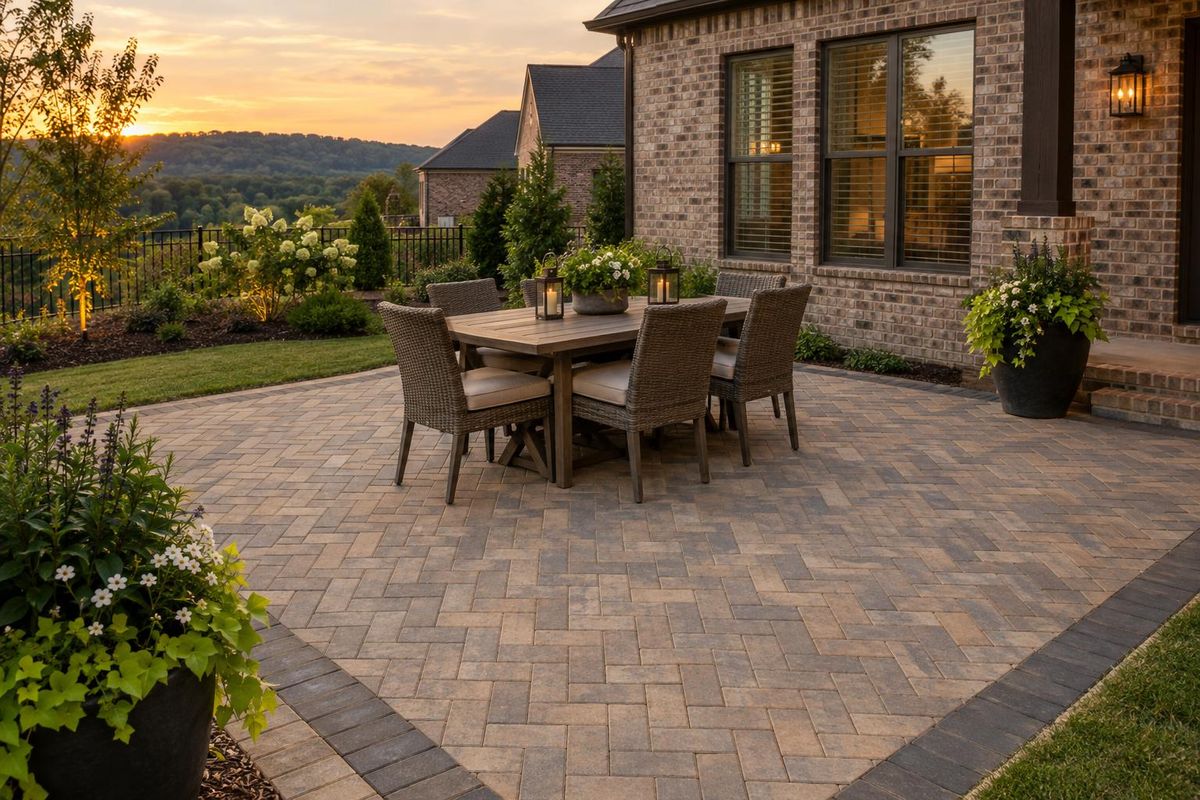
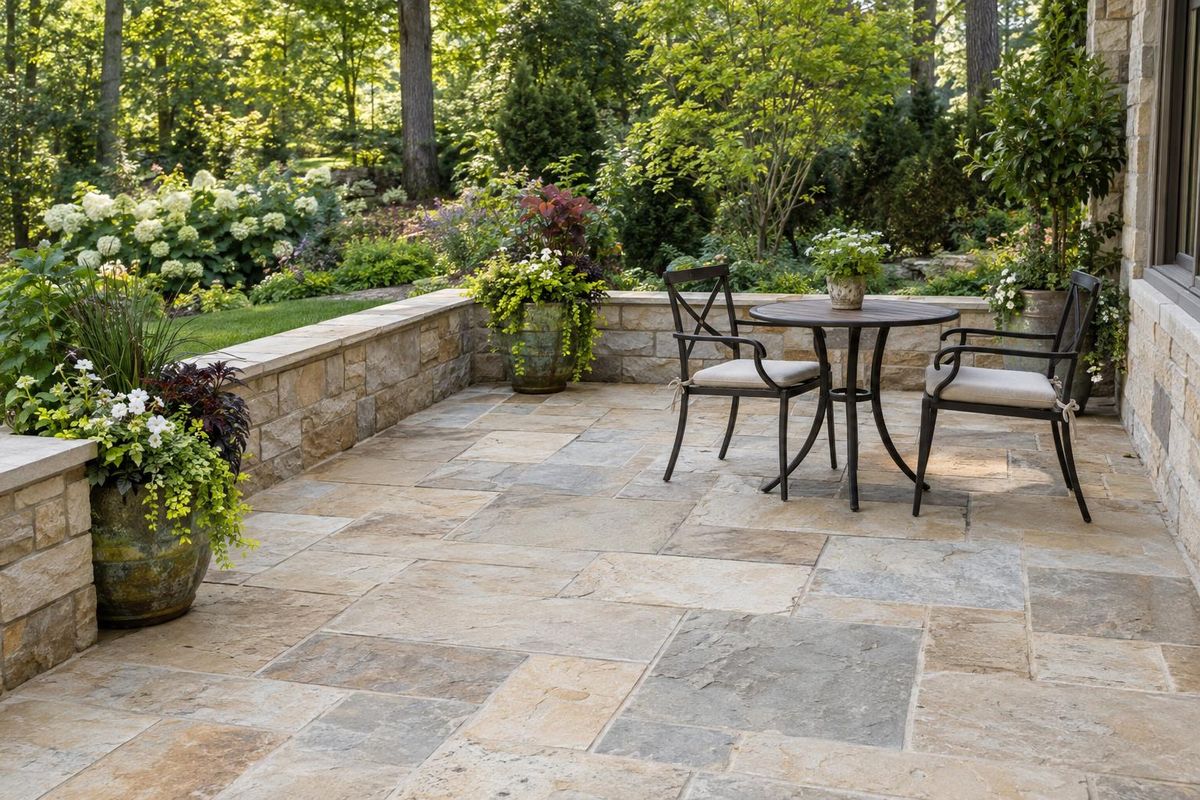
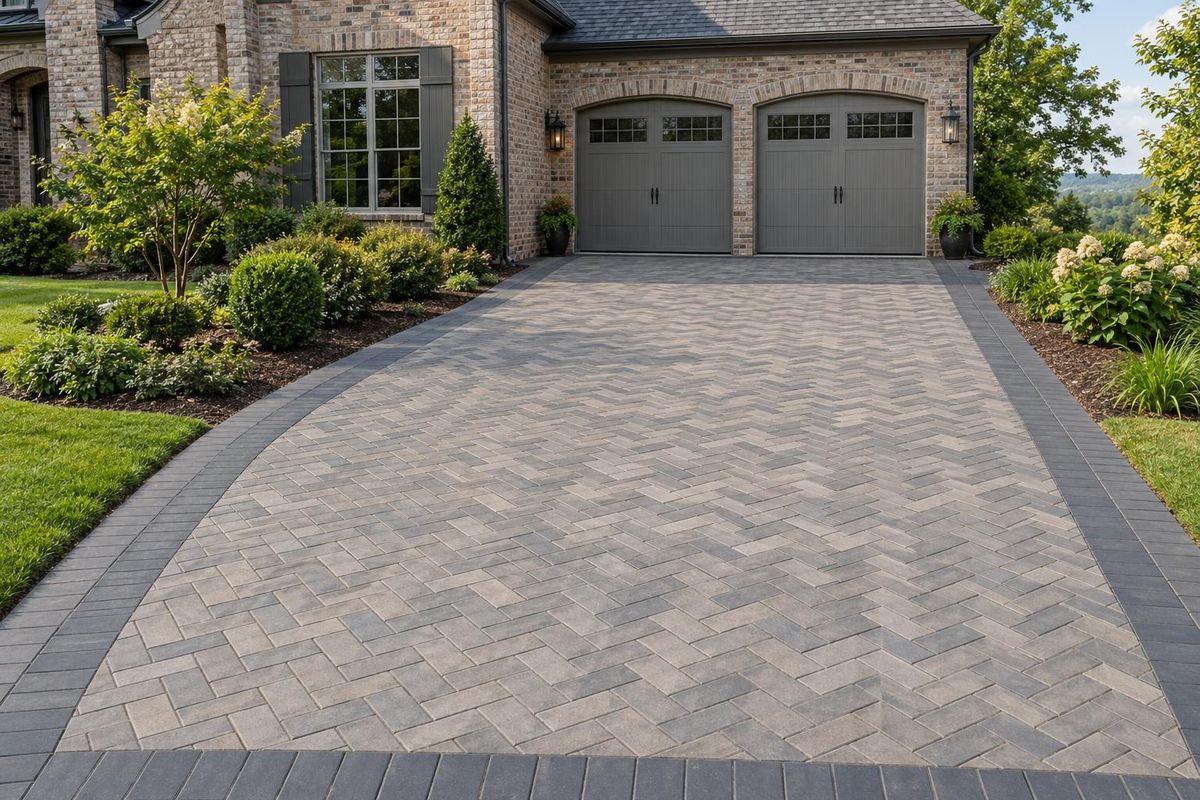
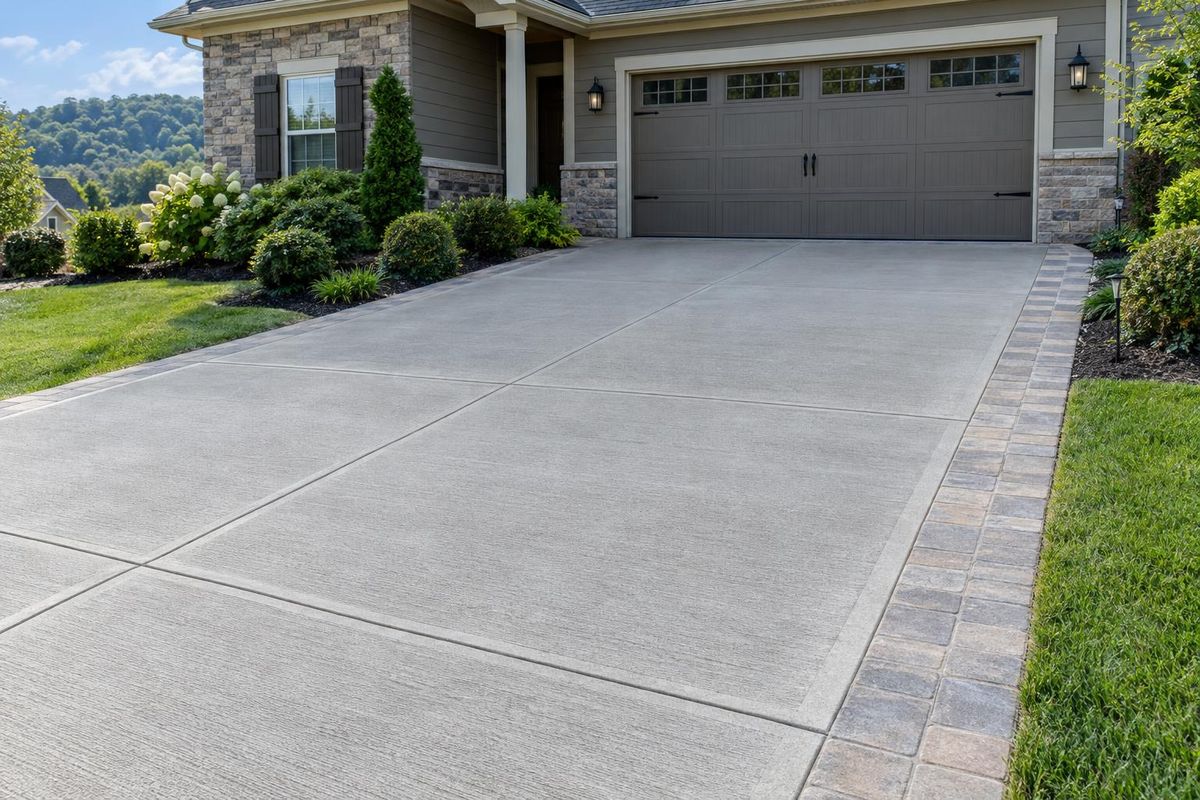
Pavers are interlocking units that can flex a little and be repaired section by section. Concrete is a rigid slab that is economical and strong when poured correctly. Both can have borders and decorative features.
The choice depends on the look, how much upkeep you want to do and how you plan to use the surface.
Base and thickness
Driveways carry heavy loads. The base of crushed stone must be deeper and well compacted, and concrete needs adequate thickness and reinforcement. Soft or wet soil may need extra stabilizing.
A thin or poorly prepared base is the main reason for cracking and rutting.
Joints, edges and drainage
Concrete needs control joints so cracks happen in neat lines. Pavers need edge restraint so the field stays tight. Drives should slope to shed water, with attention to where water goes at the garage and the street.
Aprons at the street may be regulated, so check local rules.
Where to learn more
The associations and makers below publish technical guidance. Brand names and organizations belong to their owners, and we are not affiliated with them.
Official sites to explore
Brand names and logos belong to their owners. These links open the official websites in a new tab, and we are not affiliated with them.
Quick answers
How thick should a concrete driveway be?
Residential driveways are commonly poured thicker than patios and reinforced. We specify it for your site.
Can I drive on new pavers right away?
Often yes once joint sand is compacted. We advise on timing.
Do driveway aprons need a permit?
Often. The apron sits in the right-of-way in many cities.